
KIOSKS AND DIGITAL LECTERNS
Direct interaction between user and system.
Digital kiosks and lecterns allow the deployment of self-service, consultation or management experiences in commercial, corporate and institutional environments, integrated within the DEX Suite ecosystem.
They are not screens with support. They are active points of operation.
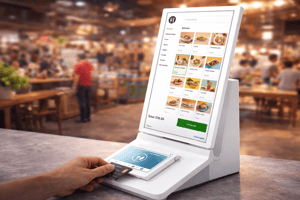
INDUSTRIAL TOUCH SCREEN
Smooth and robust interaction.
- Multi-point capacitive technology
- High durability for intensive use
- Protective tempered glass
- Accuracy in high-traffic environments
FLEXIBLE FORMATS AND CONFIGURATIONS
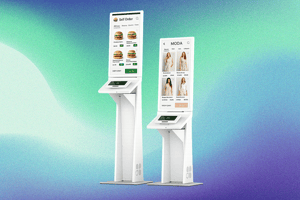
Adaptation to space and use case.
- 22" to 55" as required
- Vertical or horizontal
- Stand-alone kiosk or integrated lectern
- Integration in furniture or reception
PERIPHERAL INTEGRATION
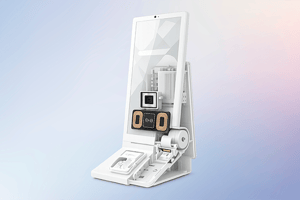
Ready for real operation.
- QR / bar code reader
- NFC / RFID
- Thermal printer
- Payment terminal
- Camera or presence sensor
PROFESSIONAL DESIGN AND FINISHING
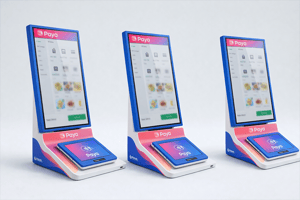
Aesthetic adaptation to the environment.
- Housing customization
- Integration with corporate image
- Robust materials
- Vandal resistant solutions according to environment
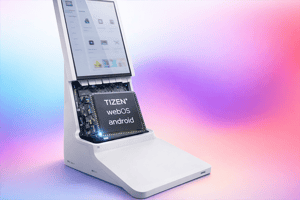
SOC OR INTEGRATED PLAYER
Optimized architecture.
- Android / Windows / Linux support
- Direct integration with DEX Suite
- Remote management
- Reduction of critical points
24/7 CONTINUOUS OPERATION
Designed for intensive use.
- Industrial components
- Optimized ventilation
- Protected electronics
- High stability in massive deployments
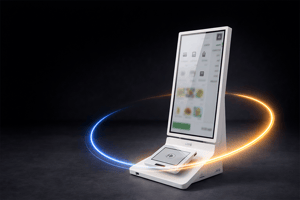
THE POINT OF INTERACTION AS PART OF THE DIGITAL ECOSYSTEM
Kiosks do not operate in isolation. They are integrated within a connected architecture.
Direct connection with POS, ERP, CRM and order management systems.
Synchronization of products, prices, stock and promotions in real time.
The kiosk is not just an interface: it is an active point of sale.
Complete order management, payment, validation and automatic dispatch to the kitchen or back-office.
Remote update of menus, navigation flows, languages and campaigns.
Full control of all kiosks and lecterns from a single panel.
Integration with queue management and order status screens.
Direct connection between self-service, kitchen and pick-up.
Real-time monitoring of connectivity, hardware status, printers and payment terminals.
Proactive alerts in case of incidents.
Record interactions, usage times, order abandonment and conversion.
Actionable data to optimize UX, average ticket and POS performance.
TECHNOLOGY WITH OPERATIONAL RESPONSIBILITY
The value is not in the device, but in how it is integrated, deployed and managed within your operating model.
KEYS TO KIOSK AND LECTERN INTEGRATION
Critical aspects of integration, business continuity and centralized control in large-scale commercial networks.
Yes, kiosks and lecterns can be integrated with ERP, CRM, POS, stock systems or loyalty platforms through specific APIs and connectors.
Synchronization can be real-time or event-driven, allowing products, prices, promotions or availability to be updated without manual intervention.
The goal is for the self-service point to be part of the existing operational flow, not to create a parallel system.
Management is centralized from DEX Manager.
Any changes in products, prices or campaigns can be automatically updated in all connected kiosks and lecterns, ensuring consistency between physical and digital channels.
This reduces errors, eliminates manual processes and ensures consistency across the network.
Yes, they can integrate payment terminals (contactless, chip & pin), QR readers, NFC or proprietary validation systems.
The payment flow is integrated into the order process, connecting to the transactional system of the business and sending the information to the back-office or kitchen in real time.
The architecture contemplates security and encryption according to current regulations.
Yes, industrial components designed for high traffic environments and continuous operation are used.
They include optimized ventilation, tempered glass, protected electronics and robust structures.
They are intended for retail, foodservice, corporate or public environments with a high volume of users.
Yes, all devices are managed from DEX Suite, allowing interfaces, navigation flows, languages and campaigns to be updated in real time.
Segmentation can be done by store, region or type of point, ensuring homogeneous governance in multi-site networks.
The platform allows monitoring connectivity, operating system status, printer, reader and payment terminal operation.
Proactive alerts are generated in the event of incidents, facilitating preventive maintenance and reducing downtime.
In critical environments, SLAs can be established with continuous operational support.
Metrics such as interaction time, order abandonment, most selected products, conversion and performance by time slot are recorded.
This data allows optimizing the user experience, improving the average ticket and adjusting the operation according to the actual demand.
Yes, the physical design can be adapted to the corporate identity (finishes, colors, branding, furniture integration).
At the functional level, the interface is configured according to the use case: full self-service, consultation, check-in, registration or information point.
Each deployment is designed in line with the customer's operating model.
