
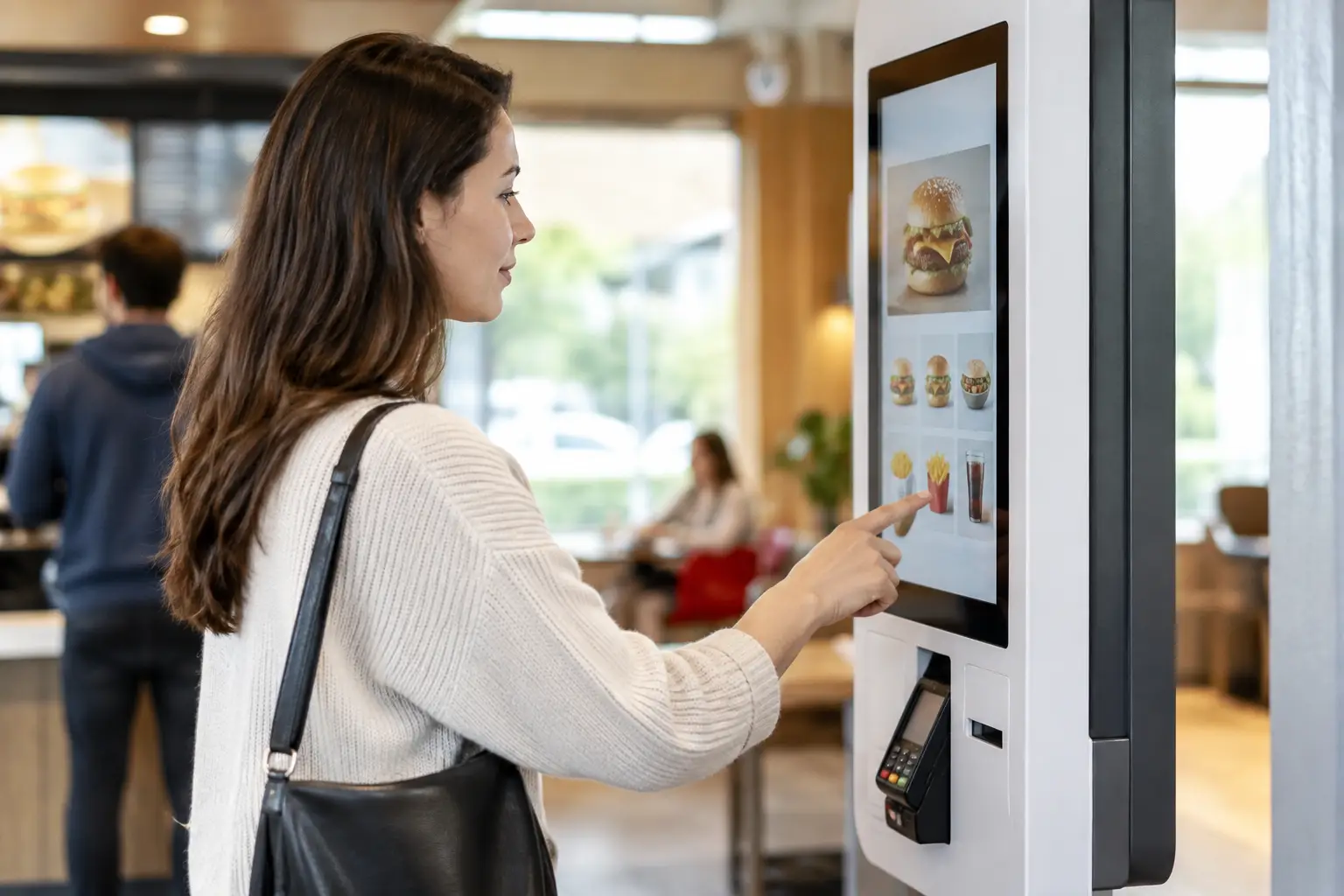
A payment failure at a self-service kiosk is rarely just a declined card. For the customer, it is a stopped transaction, a longer line, and often a reason to abandon the purchase. For operations teams, the question of what causes kiosk payment failures is more consequential: which layer failed, who owns the response, and how quickly can the device return to revenue-generating service?
The answer usually sits across a chain of systems. The kiosk, payment terminal, acquiring bank, processor, network, application, and back-office integrations must all behave as expected. A fault in any one layer can produce the same message on screen: payment unavailable. Treating every incident as a terminal problem leads to unnecessary site visits, repeated outages, and weak operational visibility.
What Causes Kiosk Payment Failures Across the Stack
Payment reliability depends on a controlled architecture, not on one component. The most common failures fall into eight root-cause groups, and several can be present at the same time.
1. Network instability and poor connection design
Payment authorization requires a stable, low-latency path between the payment terminal and the processing environment. A temporary loss of connectivity, high packet loss, DNS failure, expired network credentials, or a restrictive firewall rule can interrupt the transaction before authorization is completed.
Wireless connectivity is often the weak point in high-footfall environments. A kiosk may appear online because its signage player or local application is still reachable, while the payment terminal is isolated on a separate VLAN or has lost its secure connection. The operational requirement is not simply “internet available.” It is verified connectivity for each critical endpoint, with monitoring that distinguishes a local device issue from a wider site or provider incident.
2. Payment terminal configuration drift
A terminal can be physically powered and connected yet unable to accept payment because its configuration is no longer aligned with the payment environment. Merchant IDs, terminal IDs, encryption keys, certificates, acquirer parameters, and accepted payment methods must be correct and current.
Configuration drift commonly appears after a terminal swap, a payment provider change, a regional rollout, or an update completed inconsistently across sites. If a chain manages hundreds of kiosks, manual configuration creates an avoidable governance risk. Device-specific settings need version control, approval processes, and traceability so teams can identify which configuration was active when the transaction failed.
3. Expired certificates, keys, or software components
Payment systems depend on security credentials with fixed lifecycles. Expired certificates, encryption keys, tokenization components, or operating system dependencies can stop a previously reliable transaction flow without warning to the store team.
This category is particularly damaging because the kiosk may otherwise look healthy. Content displays correctly, the menu loads, and the touch interface works. Only at checkout does the failure become visible. A centralized platform should track software versions and planned maintenance windows, while payment specialists maintain a clear ownership model for certificates and cryptographic key rotation.
4. Peripheral hardware faults
A failed card reader, damaged cable, loose USB connection, power fluctuation, overheated terminal, or worn contactless antenna can all prevent payments. These are real hardware incidents, but they should be diagnosed from evidence rather than assumed from a generic error message.
The distinction matters operationally. Replacing a terminal will not fix an upstream authorization issue, while repeatedly rebooting a terminal with a failing power supply only delays a proper repair. Remote diagnostics should confirm device status, peripheral connectivity, power events, and recurring error patterns before dispatching a field technician.
5. Kiosk application and payment integration errors
The self-order application must pass the correct basket, amount, transaction reference, and status messages between the kiosk experience and the payment terminal. Failures occur when the application times out too early, sends duplicate requests, loses a transaction callback, or cannot reconcile an approved payment with the order-management system.
These are among the most visible failures because they create difficult customer scenarios: a card may be charged but no order is released, or the screen may ask the customer to try again after authorization has already succeeded. The required control is an explicit transaction state model. Each payment should have a unique reference and a traceable status from initiated, through authorized or declined, to completed, reversed, or escalated for reconciliation.
6. Backend, API, and dependency outages
Kiosks depend on more than payment processing. Product catalogs, pricing engines, loyalty services, tax logic, inventory availability, kitchen systems, and order management platforms can all affect the point at which a customer pays.
An unavailable API may be reported as a payment failure even when the acquirer is functioning normally. For example, if a kiosk cannot validate the final order total after a promotion is applied, it may prevent checkout to avoid a pricing discrepancy. This is the correct customer-protection behavior, but it requires observability across the complete transaction path. Teams need to see whether failure rates correlate with a specific API, software release, location, or product configuration.
7. Payment-provider or issuer declines
Not every declined transaction is a kiosk failure. An issuer may decline for insufficient funds, fraud controls, spending limits, offline restrictions, or card status. A processor may also reject a transaction due to risk rules or an unavailable payment method.
The operational challenge is separating expected declines from technical declines. If every decline is counted as kiosk downtime, reliability reporting becomes misleading. If technical declines are treated as ordinary customer declines, genuine faults remain hidden. Reporting should categorize response codes, retry behavior, and completion rates by tender type, terminal, site, and time period.
8. Poor deployment and change governance
Many recurring incidents begin with a change that was not fully tested under real operating conditions. A kiosk application update may conflict with terminal middleware. A network security change may block a required endpoint. A new menu integration may create long response times that cause payment timeouts during peak periods.
A controlled release process reduces this exposure. It should include staging validation, limited pilot deployment, rollback capability, defined acceptance criteria, and monitoring after release. The trade-off is clear: a disciplined rollout can take longer than pushing a fix to every device immediately. In a distributed estate, that additional control usually costs less than resolving a widespread service interruption during trading hours.
Build a Faster Operational Response
The fastest response starts before an incident. Operations teams should define what evidence is required to classify a failure and who owns each domain: site connectivity, kiosk hardware, payment terminal, application, payment provider, and order-management integration.
At minimum, a service desk or network operations center should be able to answer four questions within minutes:
- Is the kiosk online and is the payment terminal reachable?
- Is the issue isolated to one device, one site, or multiple locations?
- Did the transaction reach the payment provider, and what response code was returned?
- Did a recent configuration, software, network, or menu change precede the event?
Centralized Control Reduces the Cost of Failure
For organizations operating large kiosk estates, payment availability should be managed as a business-critical service. DEX Manager supports centralized visibility and control of distributed digital endpoints, helping operations teams monitor device status, apply controlled software and content updates, and maintain traceability across the kiosk estate. It can be deployed by SIA Interactive or through a certified partner network, according to the organization’s delivery model.
The payment terminal itself may be managed by a separate specialist platform, and that separation is often necessary for compliance and security. The value of centralized kiosk management is the ability to correlate terminal incidents with the surrounding operating context: device health, kiosk application status, connectivity, content release, and site-level patterns.
For a QSR chain, this may mean identifying that checkout failures began after a menu update in a specific region. For a retailer, it may mean detecting that a group of kiosks share a network path issue before store teams report it. For a bank or corporate environment, the priority may be maintaining an audit trail that shows exactly what changed, when it changed, and how the incident was resolved.
The practical goal is not to promise that no payment will ever fail. Issuer declines, provider incidents, and physical damage will still occur. The goal is to ensure a failure is detected early, classified accurately, contained quickly, and converted into actionable evidence. That is how kiosk payment reliability becomes an operational discipline rather than a recurring mystery at the checkout screen.