
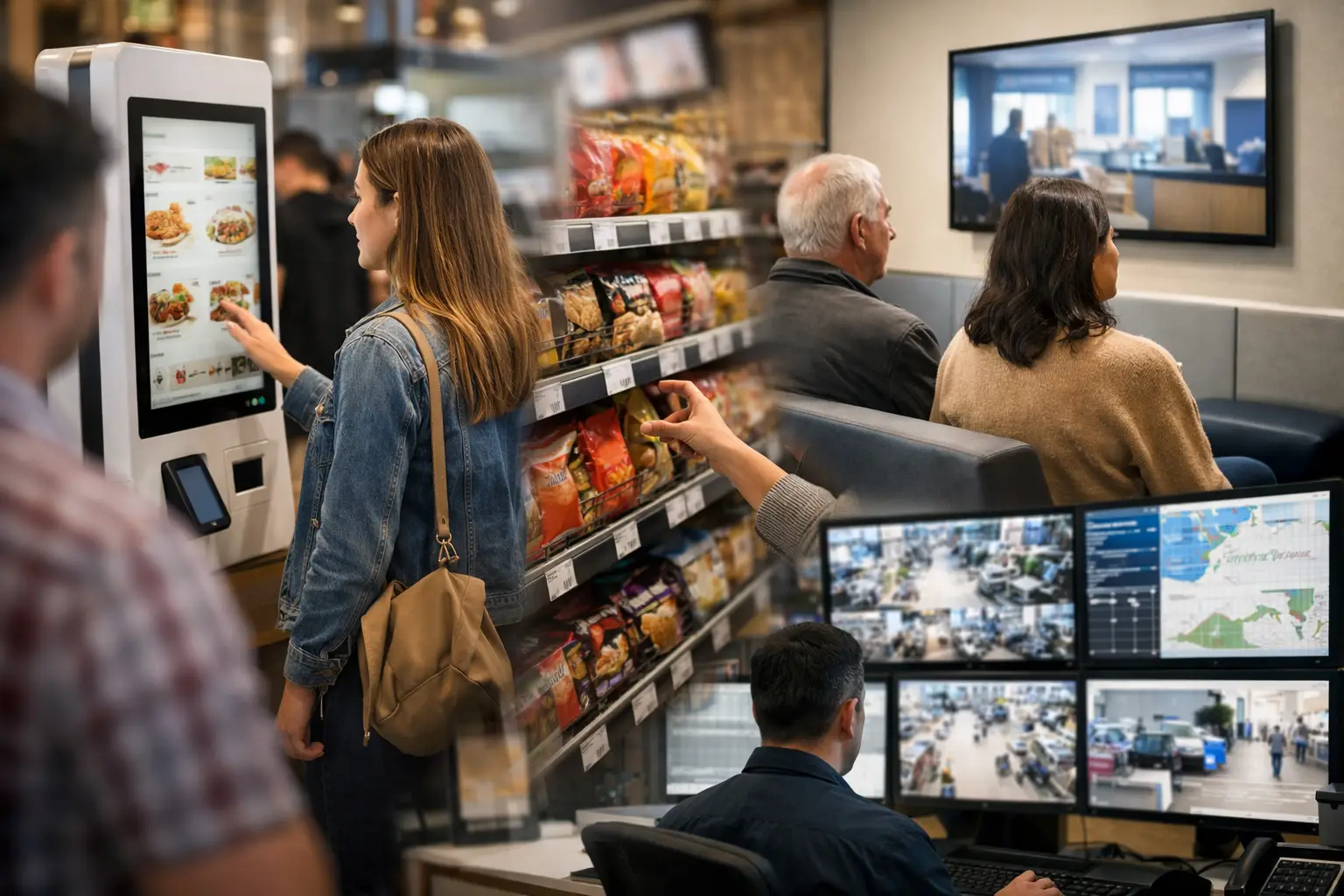
A promotion appears on screens across 300 stores at 9:00 a.m. By 9:15, a regional team identifies that the price is wrong. The issue is not simply replacing a file. It is finding every affected screen, confirming which version ran, applying the correction within the approved market rules, and proving that the update reached the network. That is the operational purpose of retail screen content governance.
For a single store, content approval can happen in a shared folder and a few messages. For a distributed retail estate, that model creates exposure. Displays may show outdated pricing, expired campaign claims, unsuitable local-language creative, or content intended for a different store format. The more screens, markets, teams, and connected systems involved, the more content management becomes a governance discipline rather than a publishing task.
Why retail screen content governance becomes critical
Retail screens sit at the intersection of brand, commercial operations, customer experience, and technology. Marketing teams need speed. Regional teams need local relevance. Store operations need certainty that displays will not interrupt daily activity. Technology teams need controlled access, auditability, and an architecture that remains available during high-traffic periods.
Those requirements can conflict. A centrally controlled network can protect consistency but become too slow for regional trading decisions. Full local freedom can improve responsiveness but fragment brand execution and create compliance risk. Effective governance does not force one side to lose. It defines who can make which decisions, on what screens, for how long, and with what evidence.
The real risk is often timing. A campaign that is accurate on Monday may become incorrect on Wednesday when inventory changes, a price expires, or a product is withdrawn. Governance must therefore cover the full content lifecycle: creation, approval, scheduling, publishing, monitoring, correction, and retirement.
Content is not the only governed asset
A retail screen network also requires governance over layouts, data sources, device groups, user roles, and emergency messaging. If a menu board pulls live pricing from a commerce platform, the data integration needs the same level of ownership as the visual template. If a store screen is reassigned from promotional content to queue management, the operational change must be controlled and traceable.
This is why a content calendar alone is insufficient. It can show what should play, but not whether the intended content actually reached the correct endpoint, whether the player is online, or whether an unauthorized user changed a schedule.
Build governance around decisions, not departments
The most useful governance model starts with decision rights. It should answer practical questions before a campaign is loaded into the system: Who owns the master creative? Who can adapt it for a market? Who approves regulated messages? Who can override scheduled content during an operational incident? Who confirms that content has been removed at campaign end?
A common approach is a tiered model. Central teams govern brand templates, corporate campaigns, platform standards, and global messaging. Regional or market teams manage language, local offers, and approved variations. Store teams have tightly defined rights for operational messages such as service disruption notices, local events, or temporary directional communication.
This is not a fixed formula. A supermarket network with local assortment may need more market-level control than a luxury retailer protecting a highly standardized brand environment. A QSR chain may give operations teams rapid override authority for menu availability and order-flow messaging. The principle remains the same: permissions should reflect business accountability, not organizational habit.
DEX Manager supports this model through centralized content and device management, role-based access, and structured screen grouping. Teams can organize screens by country, region, store, format, zone, or function, then apply content rules at the right level. A campaign can be published across the estate while allowing approved local variations without handing unrestricted access to every user.
Separate templates from campaign content
Templates are governance controls, not just design tools. A controlled template can preserve typography, pricing placement, legal copy areas, and image dimensions while allowing local teams to change approved fields. This reduces the chance that a last-minute local update breaks the customer-facing experience.
For data-driven displays, templates also establish which live data is permitted to appear and how the system behaves when data is unavailable. A blank price field, for example, may be operationally worse than a defined fallback message. These decisions should be made during template design, not during a store incident.
Put approval, scheduling, and proof in one operating model
Retail content governance fails when approvals happen in one system, assets are stored in another, schedules are managed through spreadsheets, and screen status is checked only when a complaint arrives. The result is fragmented accountability.
A governed operating model connects the content workflow to the delivery environment. Each campaign should have a defined owner, active period, target audience, target screen group, approved creative version, and removal condition. Critical content, including pricing, product claims, health notices, financial messaging, or emergency communications, should carry a higher approval threshold than general brand content.
DEX Manager provides the platform layer for this control. It enables teams to schedule content centrally, target defined device groups, manage playlists, and maintain visibility across distributed screen networks. Rather than treating deployment as a one-time action, operators can work from an environment that connects publishing decisions to endpoint status.
Traceability matters particularly when multiple agencies, markets, or certified partners contribute to the network. The platform owner, deployment partner, retail technology team, and marketing function may each have different responsibilities. Clear workflows prevent a routine campaign update from becoming an unclear chain of emails after a problem occurs.
For operationally critical locations, C-Control can extend visibility beyond the content layer. Control room operators can bring screens, connected devices, IoT signals, and incident workflows into a common operational view. That is relevant when screen communication is part of a wider response, such as redirecting customers during a facility disruption or changing digital messaging in response to queue conditions.
Measure delivery, not just campaign activity
A campaign report that confirms a schedule was created is not proof that customers saw the content. Retail teams need to distinguish between planned playback and verified availability. This requires monitoring at the device level, including connectivity, player health, playback status, and exceptions that need intervention.
The right measurement framework depends on the screen's purpose. For promotional displays, campaign compliance and uptime may be the primary measures. For self-service or QSR menu screens, teams may also track response time to price changes, menu availability updates, and operational incidents. For screens supporting queue management, the relevant outcome may be reduced congestion or improved customer flow.
There are four questions leadership teams should be able to answer without assembling manual reports:
- Which content was active on a specified screen, store, or date?
- Which locations received an approved update, and which remain in exception?
- Who approved, changed, or overrode the content?
- How quickly did the network recover when a device, data feed, or connection failed?
Design for exceptions before they happen
The most mature retail networks do not assume every screen, data feed, and campaign will behave as planned. They define exception paths in advance. What happens if a pricing feed fails? Who can suspend a campaign when a product is unavailable? What should display during a network outage? How is a faulty screen identified, escalated, and returned to service?
Fallback content should be purposeful. A generic black screen may protect against incorrect pricing, but it can create a poor in-store experience and leave customers without guidance. In many cases, an approved brand message, static directional content, or a simplified menu is a better fallback. The decision depends on the criticality of the information and the store's operating model.
This is also where platform architecture matters. Governance cannot depend on manual intervention for every exception across thousands of endpoints. Centralized management, cloud scalability, controlled access, device monitoring, and 24/7 operational support create the conditions for continuity at scale. DEX Manager can be deployed by SIA Interactive or a certified partner, with the same platform governance model applied across the network.
Governance should make retail faster, not slower
A controlled screen network is not one where every change waits for a central committee. It is one where approved teams can act quickly within defined boundaries, while the organization retains visibility, traceability, and the ability to intervene when needed.
The practical test is simple: when the next promotion changes, inventory disappears, or a store needs immediate customer communication, the right team should be able to publish the right message to the right screens and prove what happened afterward. That is the standard retail screen content governance should be designed to meet.